
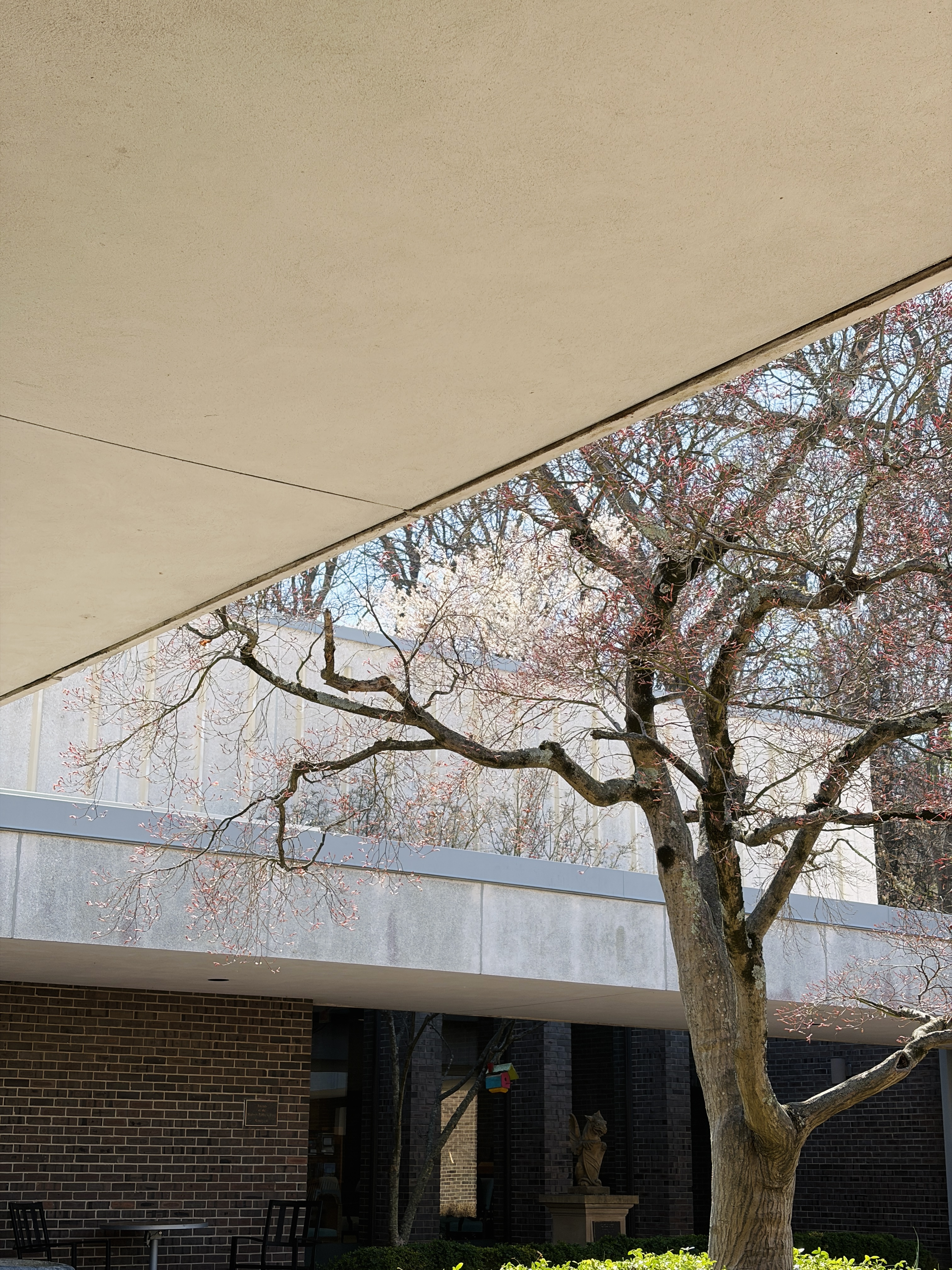
Every winter I admire the stark, leafless silhouettes of tree branches against the sky. I’ve loved this snowy, cold winter, and I’ve complained bitterly about the mild ones we’ve had over the last few years. It’s not that I love being cold or hemmed in by snow, but I want to want spring. I want to earn it.
So the other day when I was walking around looking up at those same branches, looking at their buds, willing them to open, I noticed that those buds sport a similar gold and pink and orange to their larger, slowly dying ancestors (or their future selves) in the fall.


I look at trees all the time. I’m no expert—I can’t necessarily identify more than a few—but I really like trees. So how did I never notice this stage? Have I always been so eager to see that beautiful lime or jade or chartreuse that I just ignored these other colors? Am I that person who meets someone new at a party, but looks over their shoulder for someone cooler? (I assure you, I’m not.)
Whenever I work with people on any kind of writing, whether they’re doing the writing themselves or I’m doing it for them, I always ask them for more detail. I ask just as many questions about what went wrong as what went right. I ask them what they remember about the temperature, the smell of the food, the color of the upholstery. Were there birds nearby? Was your sweater itchy?
Some people get nervous that I’m getting into the weeds, at risk of missing the important points, but what I’m really doing is trying to help people sink into the moment. I don’t include every detail I keep track of—it’s a matter of propping a door open rather than letting it slam closed. You never know what might be useful to the story you’re trying to tell.
We can talk about what someone accomplished or what wise, important advice they have to share, but the impact of those events comes through the details we use to give shape to those key moments that draw the reader in. Those details give the reader a sense of where they are and how it feels to be there. Even if that space isn’t familiar to them personally, they’ll naturally reach for their own version of an image or sense memory to place themselves there.
Know this: People want to feel what they read, and we feel through our senses. Leave those small, seemingly random details out, and the important stuff floats there like a wispy phantom, maybe never settles, and eventually fades.
So back to the trees. I feel like I learned something this week in seeing these subtle colors of spring. All these years I’ve sought out the daffodils and forsythia and the Lily Pulitzer color scheme of the tulips and pansies, but this week I was humbled. I’ve been seeking out something that hasn’t arrived yet and missing an essential part of the process.
Earlier this week, I finished reading Great Circle, by Maggie Shipstead, a book that’s been on my shelf for years. Reader, I was mesmerized. The way she described Montana in the 1920’s or the way someone’s mouth moved or the color of a dress or …whatever! I was glued to every page—all 590 of them. I was envious. I think it was that envy that made me look more closely at all these trees. I want to be able to describe the world at that level of specificity. (The kids I teach in the evenings might have found it exhausting.)
I don’t tend to be someone who tries to encourage people to seek out wonder or awe—that’s not my business. What I do get [pleasantly] bossy about is detail, because I want your readers to feel the need to keep reading, and the only way they’re going to feel it is if you ground it in the details. So let’s all take my advice and look—look closely. Then look again just to be sure you didn’t miss anything.